Testbeds & Datasets
Experimental wireless platforms and public datasets supporting reproducible systems research.
Experimental wireless platforms and public datasets for reproducible research across Wi-Fi and mmWave MIMO systems.
Experimental Testbeds
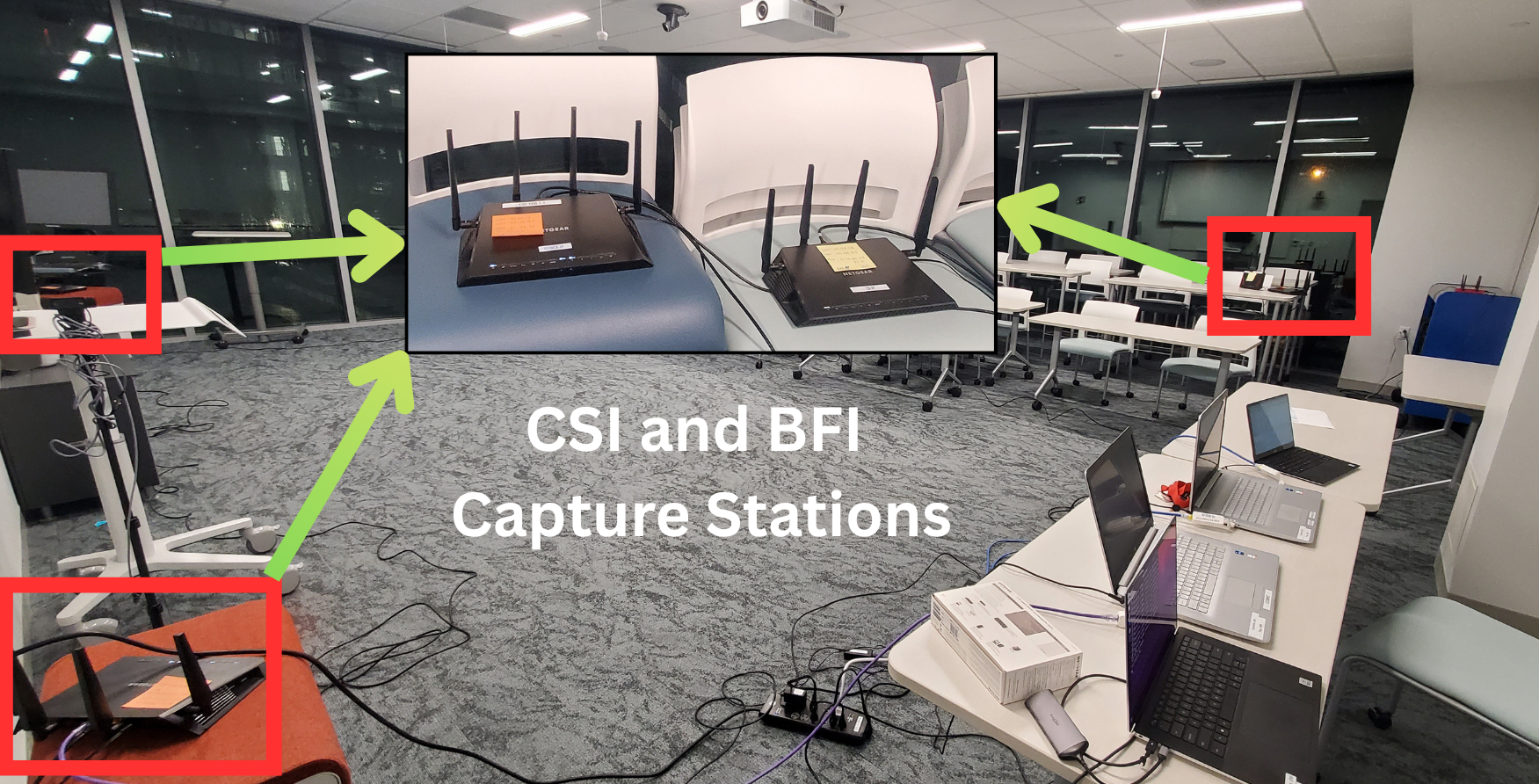
Sub-6 GHz Wi-Fi ISAC Testbed
A configurable multi-node Wi-Fi ISAC platform for comparative collection of uncompressed Channel State Information (CSI) and standards-compliant compressed Beamforming Feedback Information (BFI). Distributed capture stations support controlled sensing experiments across devices, subjects, locations, orientations, and LoS/NLoS conditions.
Measurement Stack
- CSI: Powered by Nexmon CSI for per-frame channel measurements from supported Broadcom Wi-Fi chipsets.
- BFI: Powered by Wi-BFI for extracting beamforming feedback angles and reconstructing feedback matrices from IEEE 802.11ac/ax frames.
Research Enabled
- Single- and multi-subject Wi-Fi sensing
- Cross-environment domain adaptation
- CSI-versus-BFI sensing comparisons
- Beamforming-feedback radio fingerprinting
- BeamSense, Si-FI, and CSI-BFI-HAR
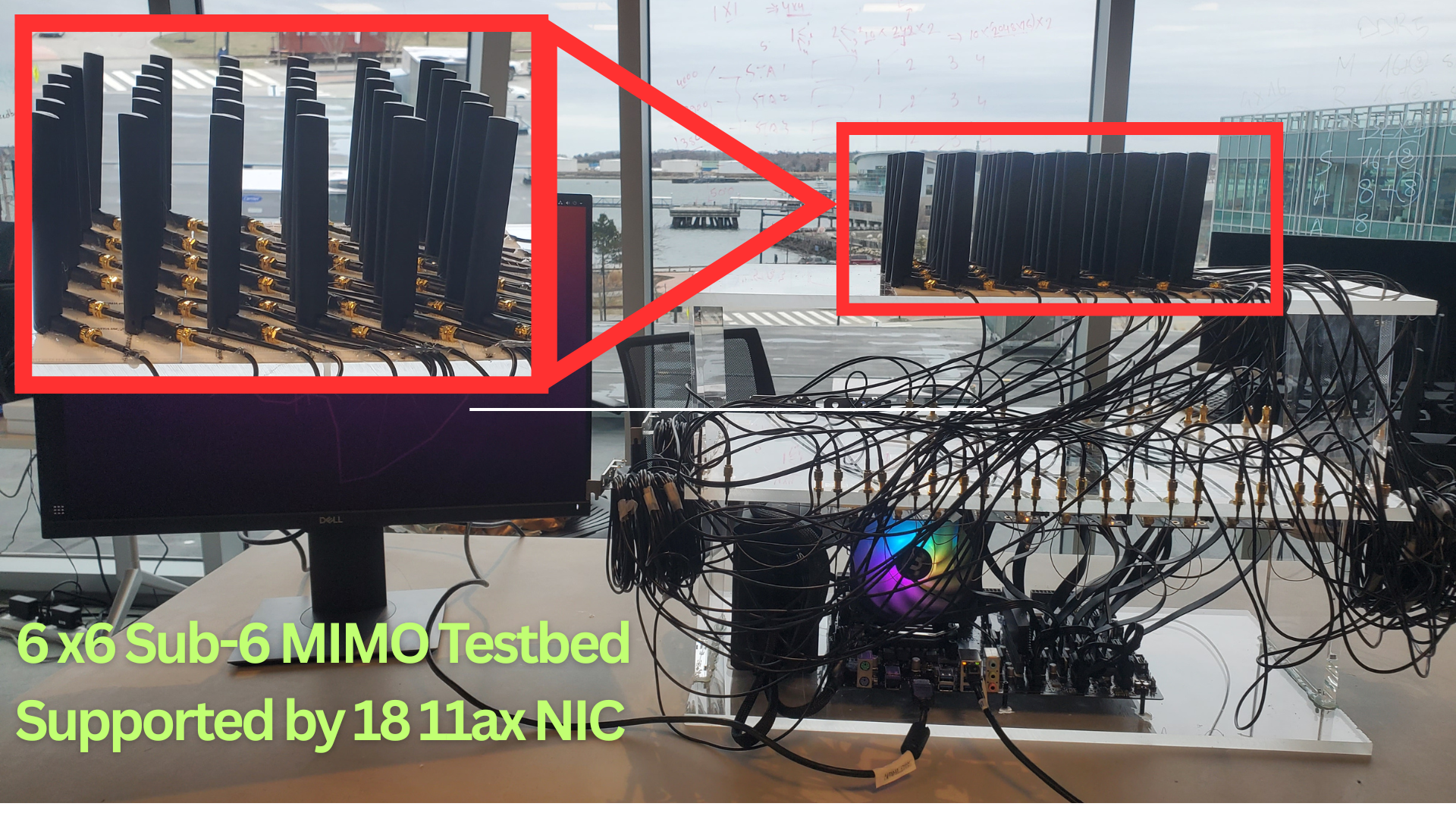
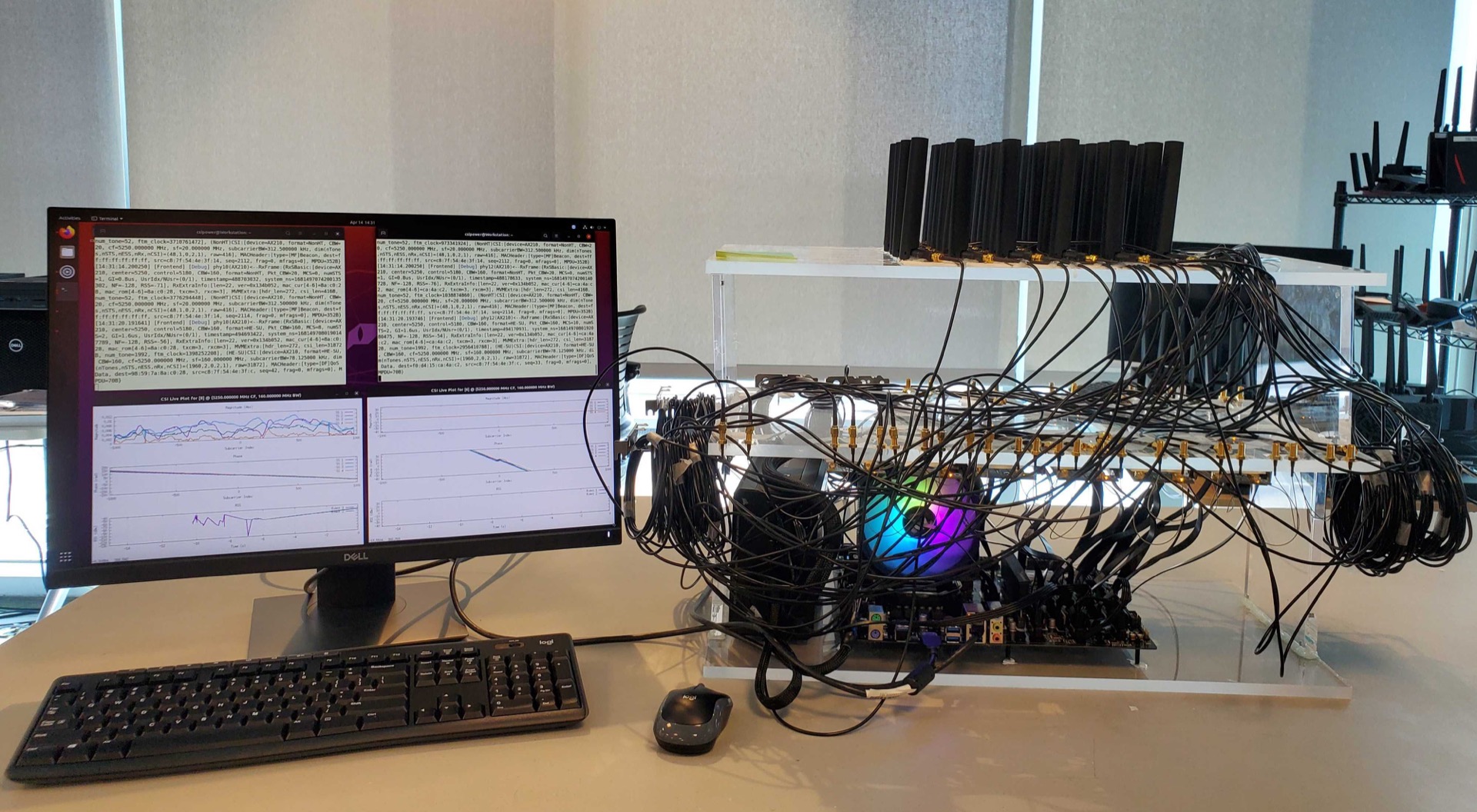
WiSEC: Multiband Wi-Fi Sensing and Communication Testbed
A modular COTS Wi-Fi platform for large-scale multi-antenna and multiband experimentation. WiSEC integrates 18 independently configurable Intel NICs with two antennas each; the NICs can operate as separate devices or be combined into larger MIMO configurations, including a reconfigurable 6 × 6 antenna array.
System Capabilities
- Independent operation across the 2.4, 5, and 6 GHz Wi-Fi bands
- Reconfigurable antenna geometries and distributed MU-MIMO deployments
- CSI and BFI acquisition from ongoing or triggered Wi-Fi transmissions
- Simultaneous real-time collection and processing with onboard compute
Research Enabled
- BeamID and DeepCSIv2 radio fingerprinting
- Large-scale beamforming and MU-MIMO evaluation
- Multiband MIMO sensing and communication
- AI-driven channel analysis and domain adaptation
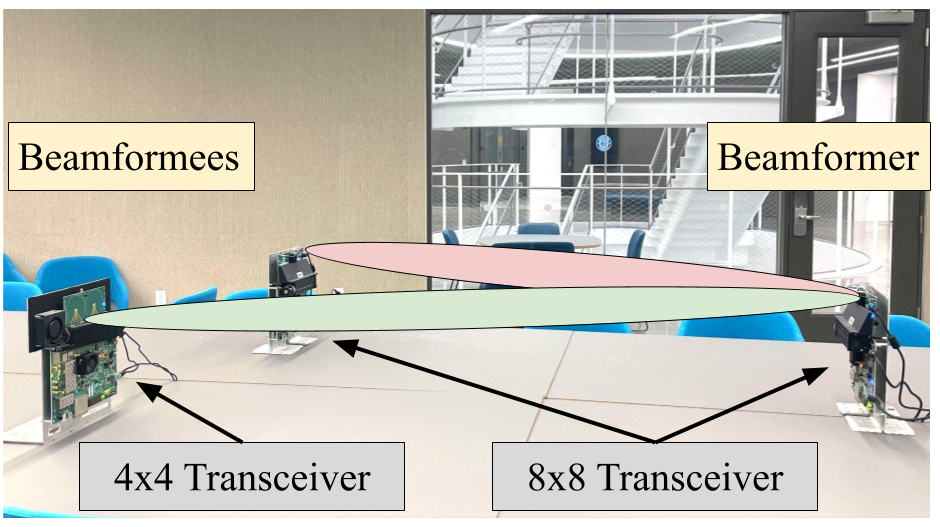
m3MIMO: Fully Digital mmWave MU-MIMO Testbed
A fully digital mmWave platform built from three custom Zynq UltraScale+ RFSoC-based software-defined radios with Pi-Radio transceivers. Two radios provide eight transmit and receive streams each, while the third supports four channels, enabling flexible communication and sensing experiments.
System Capabilities
- Point-to-point, SU-MIMO, and two-user MU-MIMO operation
- Fully digital access to high-resolution mmWave channel measurements
- OFDM-based frequency-domain multiplexing across up to 1 GHz bandwidth
- Open-source control and experimentation software
Research Enabled
- Communication-native mmWave sensing
- MAGIC micro-gesture recognition
- M3-CFR dataset collection and domain adaptation
- Tracking-based beamforming and MIMO channel estimation
Sensing-Assisted Edge Computing Testbed
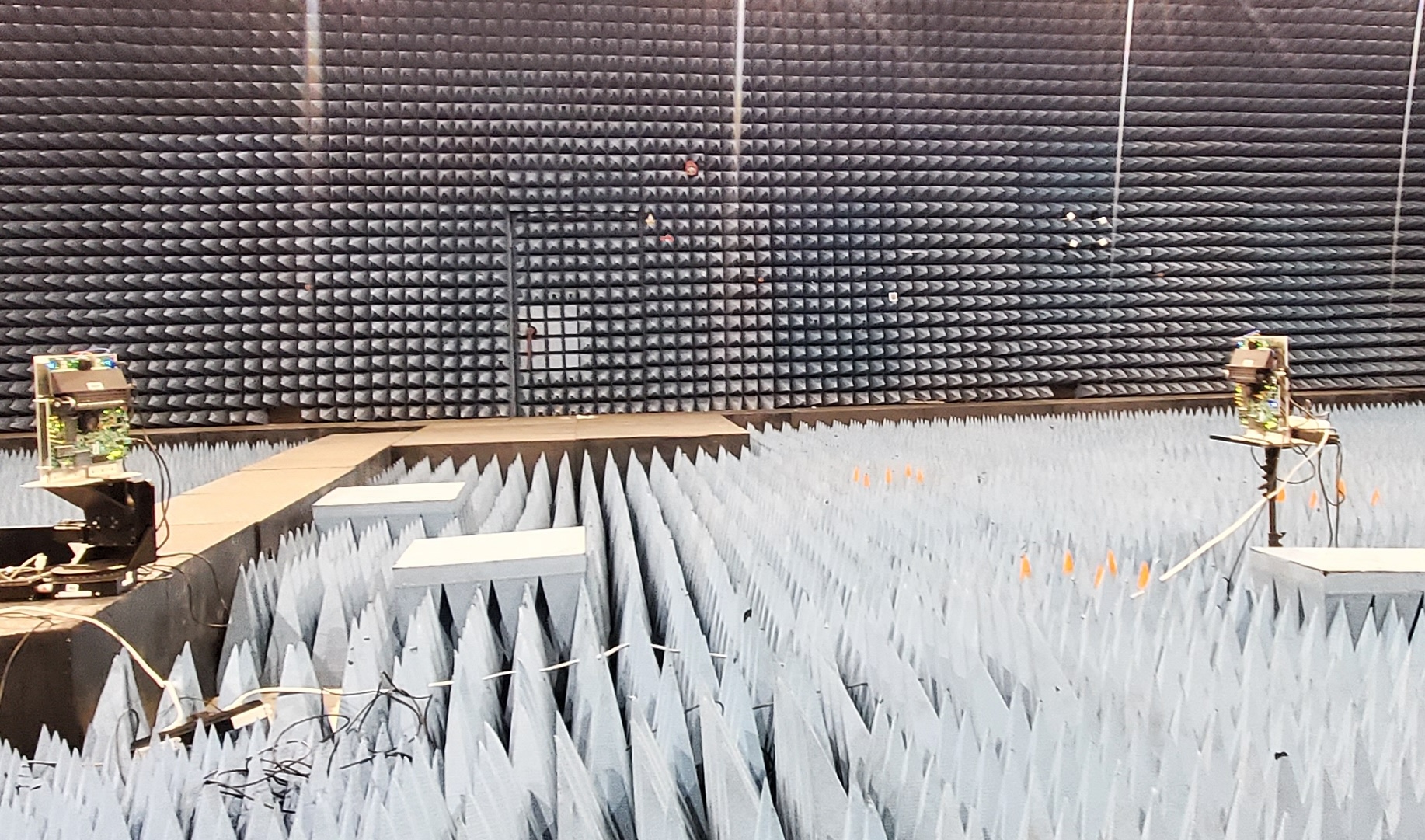
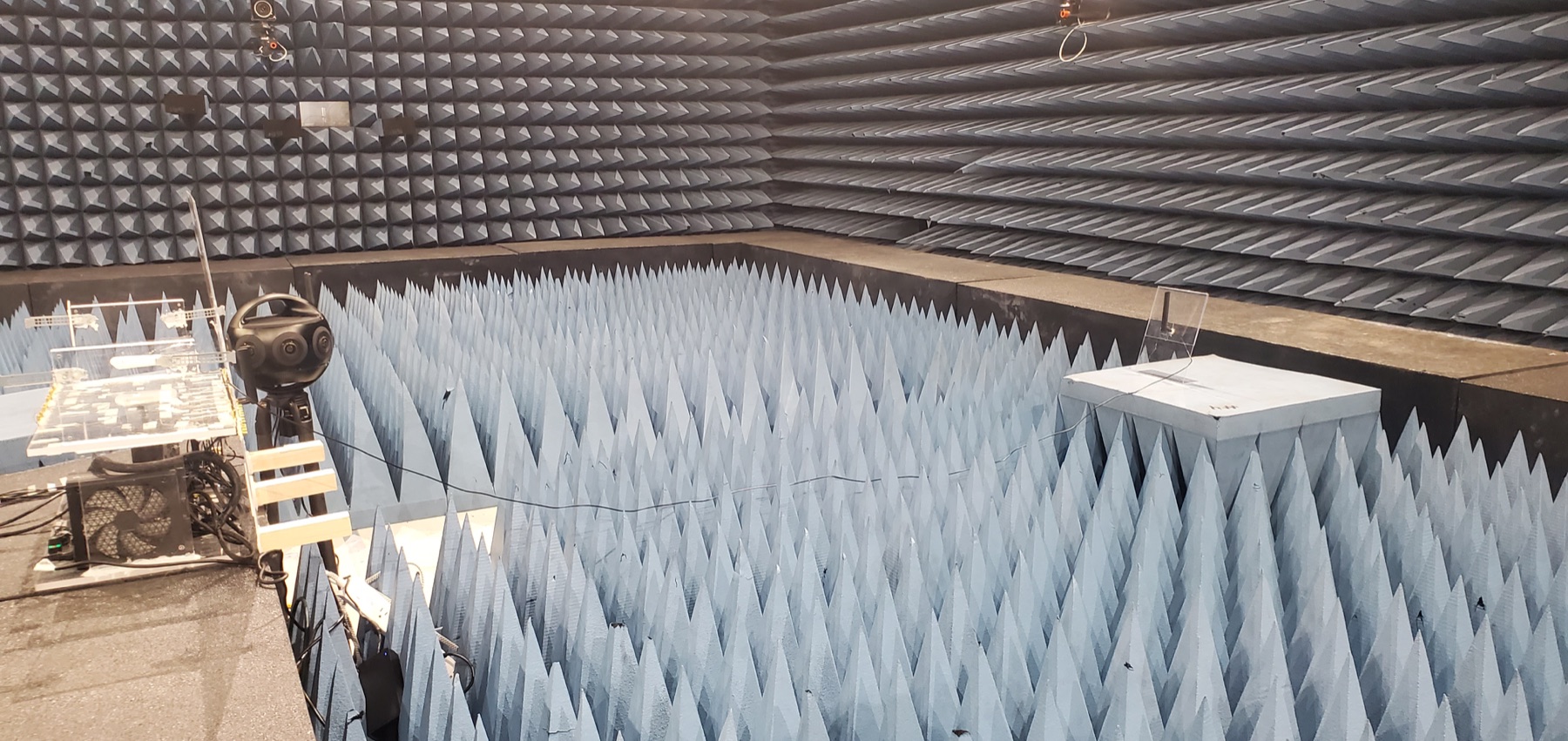
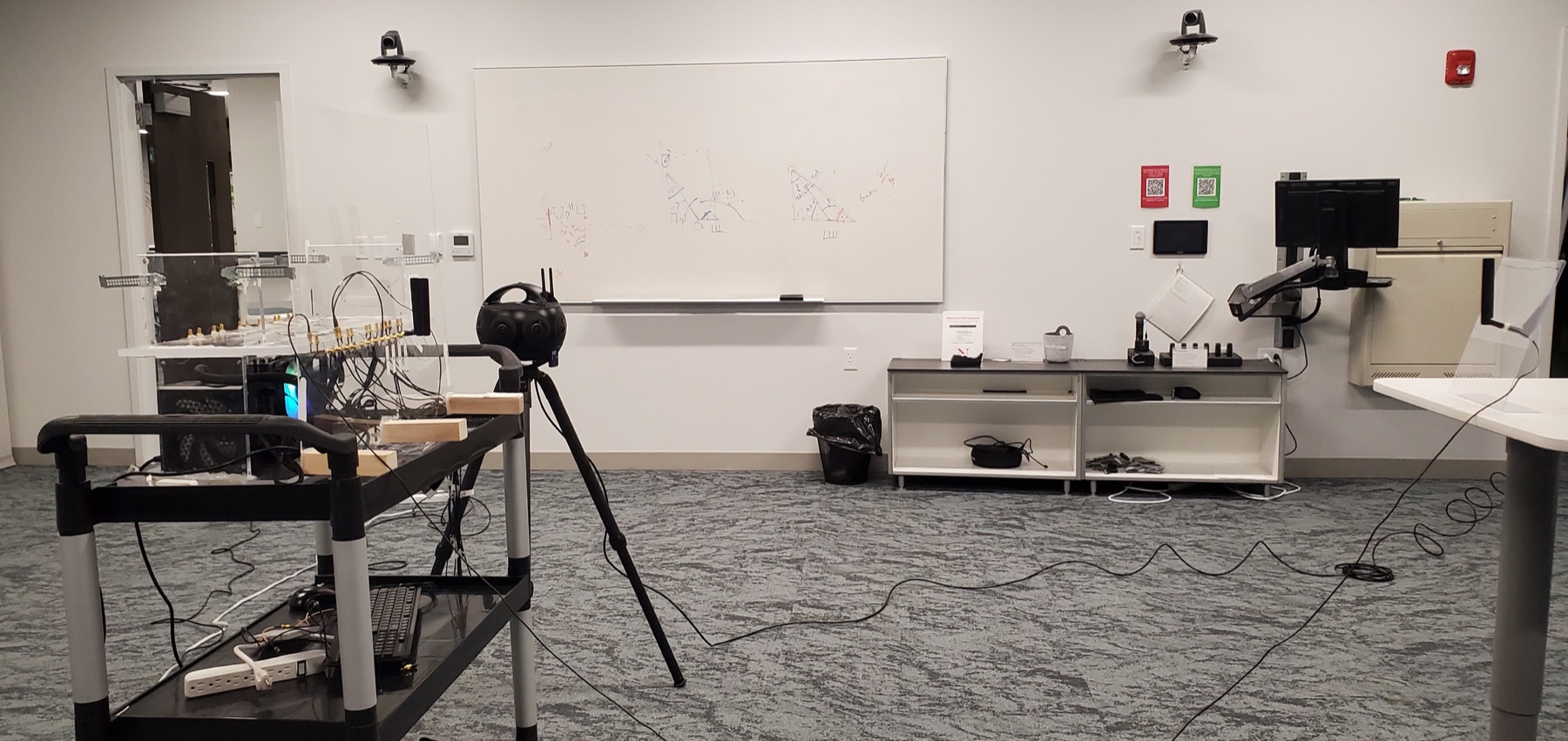
A joint wireless-sensing and visual edge-computing platform that uses Wi-Fi measurements to localize and track environmental changes. The sensed locations are mapped to regions of interest in ultra-high-resolution video, allowing the system to offload and process only the visually relevant parts of each frame.
System Capabilities
- 160 MHz Wi-Fi 6 sensing for object localization and tracking
- Synchronized capture with a 10K 360° camera
- Wireless-to-visual mapping for sensing-assisted region-of-interest selection
- Controlled anechoic-chamber and real-world entrance-hall deployments
Research Enabled
- SAWEC selective visual-data offloading
- Low-latency instance segmentation and object detection at the edge
- Open-source implementation and datasets
SOAR: Semantic-Aware UAV Edge Offloading Testbed
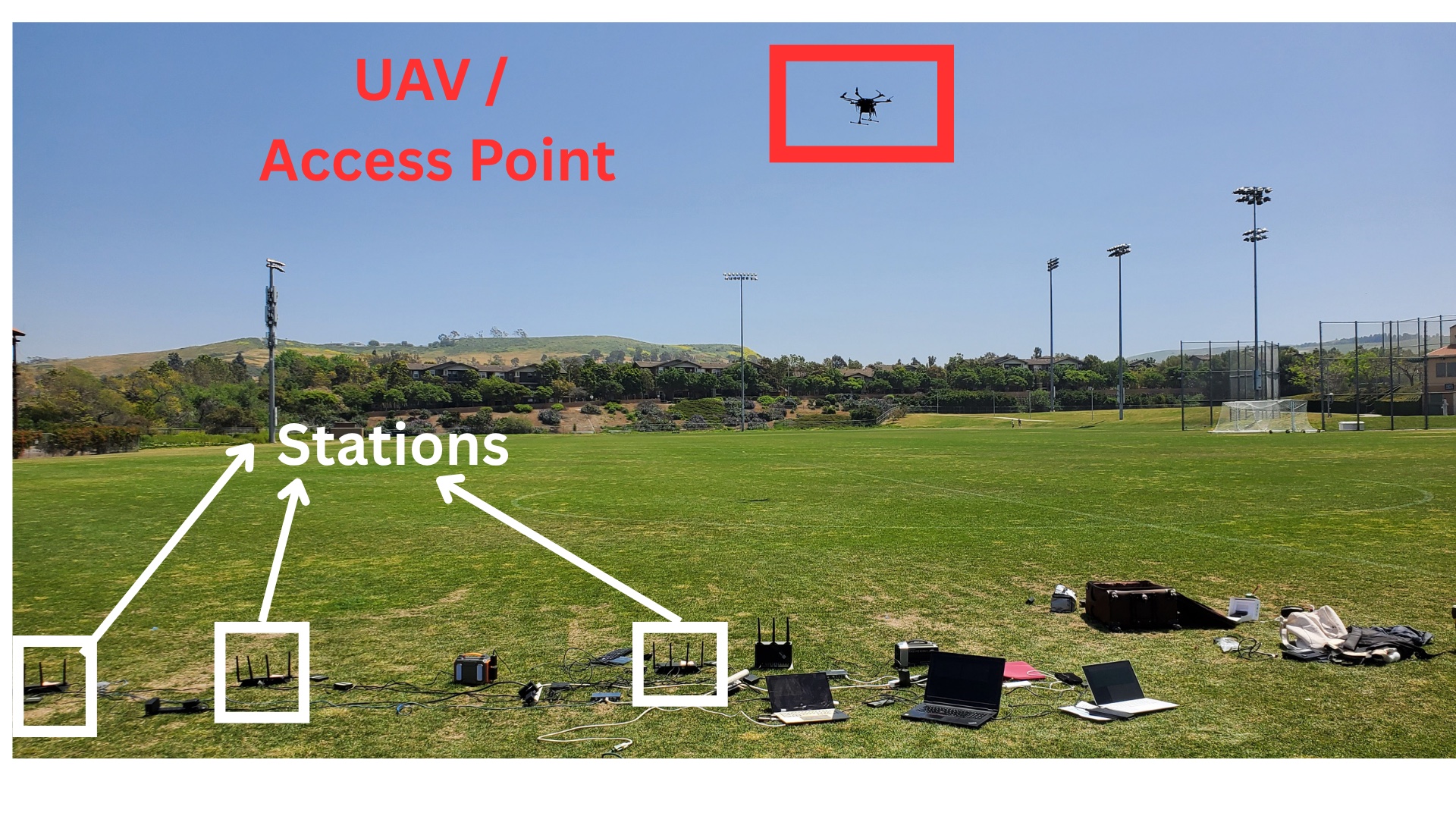
An outdoor aerial edge-computing platform for evaluating task-oriented wireless offloading under changing propagation conditions. SOAR couples application context with multi-user MIMO control so that communication resources can be adapted to the reliability needs of vision tasks rather than fixed network-level targets.
System Capabilities
- Outdoor UAV operation with distributed wireless and edge-computing nodes
- Line-of-sight and non-line-of-sight propagation experiments
- Adaptive antenna, spatial-stream, and bandwidth configuration
- Context-aware control using distributional deep reinforcement learning
Research Enabled
- SOAR semantic multi-user MIMO communication
- Task-aware wireless resource optimization
- Open-source implementation
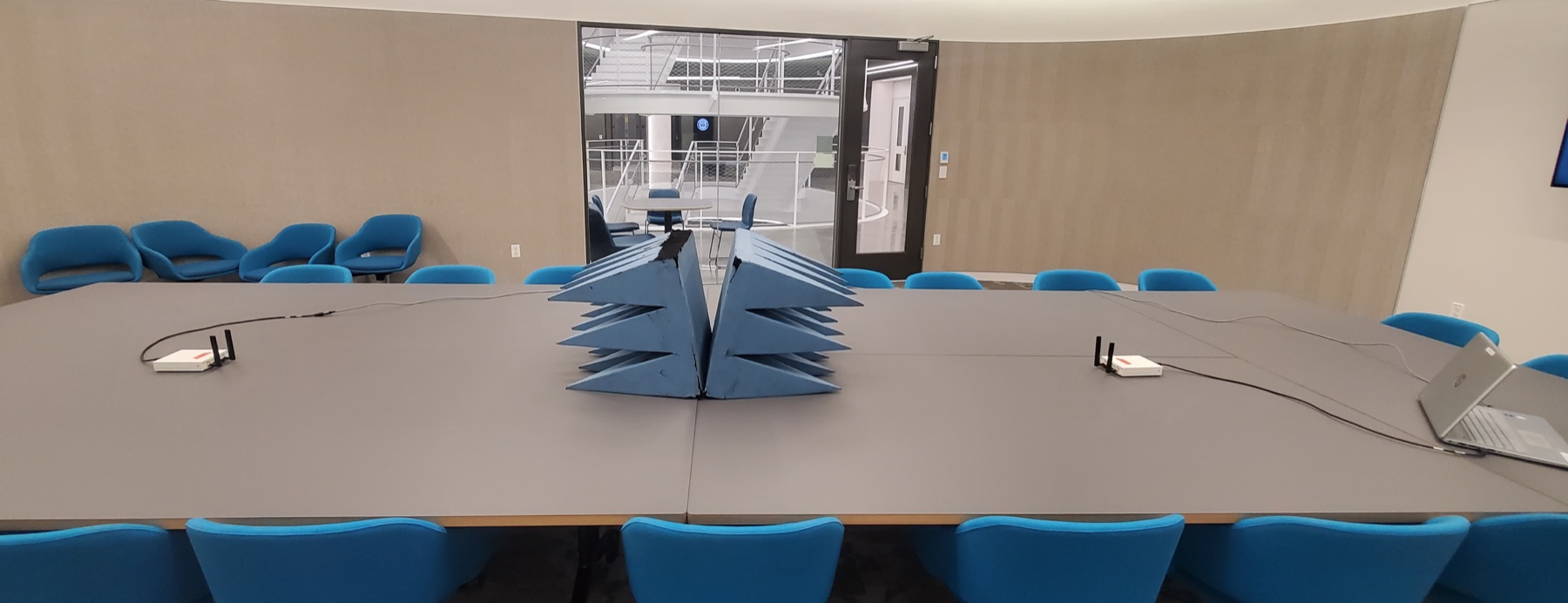
USRP-Based Over-the-Air Testbed
A configurable software-defined radio platform for prototyping and evaluating wireless systems through indoor over-the-air experiments. Distributed USRPs support measurements across different transmitter and receiver locations.
System Capabilities
- Indoor over-the-air transmission and reception
- Configurable SDR-based wireless experiments
- Measurements across different transmitter and receiver locations
Research Enabled
- Evaluation of learning-based wireless systems
- Physical-layer prototyping over real channels
- OTA experiments supporting the PhyDNNs project
Research Datasets
M3-CFR
A bi-static mmWave MIMO CFR dataset collected with the MAGIC platform for fine-grained recognition under domain shifts. It contains 10 micro-gesture classes, 3 subjects, 3 indoor environments, 3,000 labeled gesture instances, and approximately 1.5 million CFR frames.
CSI-BFI-HAR
Paired channel state information and beamforming feedback traces for 20 activities. The collection supports single- and simultaneous multi-subject recognition across multiple indoor environments, device placements, orientations, and LoS/NLoS conditions.
Download dataset · Documentation & extraction tools · IEEE DataPort · Paper
DeepCSIv2
A 60.9 GB collection of over-the-air Wi-Fi traces and reconstructed beamforming feedback matrices for physical-layer identification of client devices. The release includes raw captures, processed V matrices, extraction tools, and the learning pipeline.
BeamID
Complex-valued beamforming feedback measurements for domain-adaptive radio fingerprinting. Organized by client radio and collection location, the dataset supports source-domain training and few-shot adaptation to changing deployment environments.